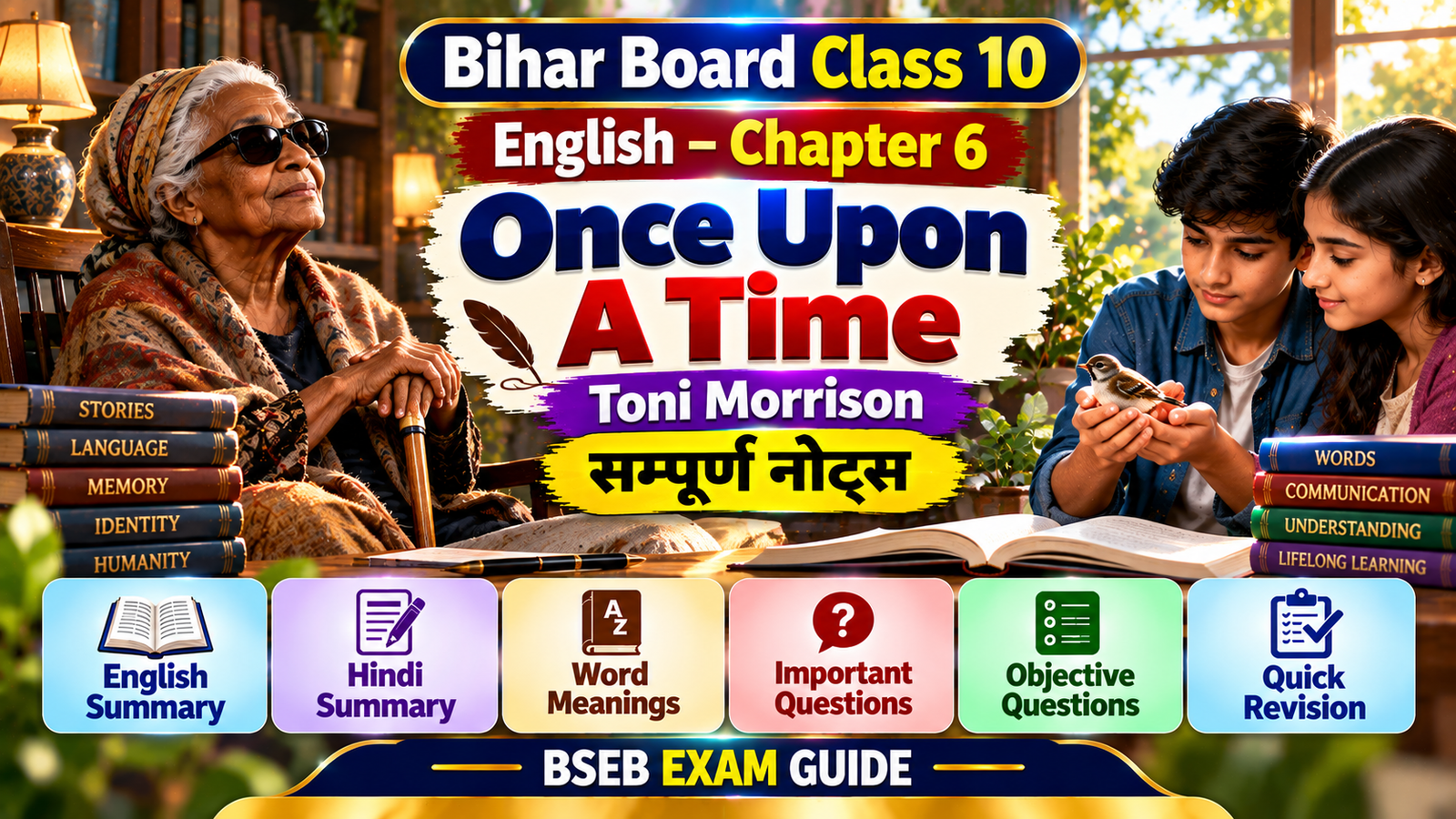
Once Upon A Time
Chapter 6 – सम्पूर्ण नोट्स
Toni Morrison • English Summary • हिंदी सारांश • Important Q&A
Chapter Introduction
Once Upon A Time प्रसिद्ध American writer Toni Morrison की एक विचारपूर्ण रचना है। इसमें एक छोटी-सी कहानी के माध्यम से language की शक्ति, उसके महत्व और उसके प्रति हमारी जिम्मेदारी को समझाया गया है।
कहानी में एक old blind woman और कुछ young visitors हैं। युवा अपने हाथ में एक bird लेकर वृद्ध महिला से पूछते हैं कि वह bird जीवित है या मृत।
इस कहानी में bird वास्तव में language का प्रतीक बन जाता है।
Language का भविष्य उन लोगों के हाथ में है जो उसका उपयोग करते हैं। भाषा को जीवित, meaningful और humane बनाए रखना हमारी जिम्मेदारी है।
इस Chapter में पढ़ेंगे
1. About Toni Morrison
Toni Morrison एक प्रसिद्ध American novelist, essayist और literary figure थीं।
उन्हें साहित्य के क्षेत्र में Nobel Prize in Literature से सम्मानित किया गया।
उनकी रचनाओं में language, identity, race, history, memory और human experience जैसे विषय महत्वपूर्ण हैं।
2. English Summary
Once Upon A Time – Summary in English
“Once Upon A Time” by Toni Morrison uses a simple story to explain the power of language and the responsibility of those who use it.
The story is about an old, blind and wise woman. She is respected for her wisdom and experience.
One day, some young people visit her. They want to test her wisdom. They carry a bird in their hands and ask whether the bird is dead or alive.
The woman cannot see the bird because she is blind, but she understands the intention behind the question.
After remaining silent for some time, she says that she does not know whether the bird is dead or alive, but she knows that it is in their hands.
Her answer gives a deeper meaning to the story. The bird becomes a symbol of language.
Just as the fate of the bird is in the hands of the young people, the future of language is in the hands of those who use it.
Language can be kept alive through responsible, creative and humane use. It can also be damaged when it is used for lies, hatred, oppression or violence.
Language carries knowledge, memory, culture, identity and human experience. Therefore, every generation has a responsibility to use language wisely.
The lesson finally teaches us that the future of language depends upon us. We should use it for truth, knowledge, understanding and humanity.
3. हिंदी सारांश
Once Upon A Time – आसान हिंदी सारांश
Once Upon A Time में Toni Morrison एक छोटी-सी कहानी के माध्यम से भाषा की शक्ति और उसके प्रति हमारी जिम्मेदारी को समझाती हैं।
कहानी में एक वृद्ध और नेत्रहीन महिला है। वह अपने अनुभव और बुद्धिमत्ता के लिए प्रसिद्ध है।
एक दिन कुछ युवा उसके पास आते हैं। वे उसकी बुद्धिमत्ता की परीक्षा लेना चाहते हैं। उनके हाथ में एक पक्षी होता है।
वे वृद्ध महिला से पूछते हैं कि उनके हाथ में जो पक्षी है, वह जीवित है या मृत।
महिला देख नहीं सकती, लेकिन वह युवाओं के प्रश्न के पीछे छिपे इरादे को समझ जाती है।
कुछ देर बाद वह कहती है कि उसे यह नहीं पता कि पक्षी जीवित है या मृत, लेकिन इतना अवश्य जानती है कि पक्षी उनके हाथ में है।
यही उत्तर कहानी का सबसे महत्वपूर्ण भाग है। यहाँ पक्षी भाषा का प्रतीक बन जाता है।
जिस प्रकार पक्षी का भविष्य युवाओं के हाथ में है, उसी प्रकार भाषा का भविष्य भी उसका प्रयोग करने वाले लोगों के हाथ में है।
यदि भाषा का प्रयोग ज्ञान, प्रेम, सत्य और संवाद के लिए किया जाए, तो भाषा जीवित और समृद्ध रहती है।
यदि भाषा का प्रयोग झूठ, घृणा, भेदभाव और उत्पीड़न के लिए किया जाए, तो उसकी शक्ति कमजोर होने लगती है।
भाषा केवल शब्दों का समूह नहीं है। यह हमारी संस्कृति, इतिहास, स्मृति, पहचान और अनुभवों को एक पीढ़ी से दूसरी पीढ़ी तक पहुँचाती है।
इसलिए नई पीढ़ी की जिम्मेदारी है कि वह भाषा का सही, रचनात्मक और मानवीय उपयोग करे।
“The future of language is yours.” अर्थात भाषा का भविष्य हमारे हाथों में है।
4. आसान हिंदी में Explanation
Old Blind Woman
कहानी की वृद्ध महिला शारीरिक रूप से देख नहीं सकती, लेकिन उसके पास जीवन का गहरा अनुभव और बुद्धिमत्ता है।
युवा लोग सोचते हैं कि वे उसे कठिन प्रश्न में फँसा देंगे, लेकिन महिला उनके प्रश्न के पीछे छिपे उद्देश्य को समझ जाती है।
The Young Visitors
कुछ युवा अपने हाथ में एक bird लेकर वृद्ध महिला के पास आते हैं। उनका उद्देश्य केवल जानकारी प्राप्त करना नहीं, बल्कि उसकी बुद्धिमत्ता की परीक्षा लेना है।
Dead or Alive?
युवा पूछते हैं कि उनके हाथ में मौजूद bird dead है या alive। महिला सीधे उत्तर देने के बजाय जिम्मेदारी उन्हीं युवाओं पर डाल देती है।
पक्षी का भविष्य उस व्यक्ति के हाथ में है जिसने उसे पकड़ रखा है।
Bird = Language
Toni Morrison bird को language के metaphor के रूप में प्रस्तुत करती हैं।
Language अपने आप अच्छी या बुरी नहीं होती। उसका प्रभाव इस बात पर निर्भर करता है कि लोग उसका उपयोग किस प्रकार करते हैं।
Language की शक्ति
भाषा के माध्यम से हम ज्ञान बाँट सकते हैं, अपनी स्मृतियों को सुरक्षित रख सकते हैं और अपनी संस्कृति को अगली पीढ़ी तक पहुँचा सकते हैं।
लेकिन भाषा का गलत प्रयोग लोगों को अपमानित करने, दबाने या भ्रमित करने के लिए भी किया जा सकता है।
नई पीढ़ी की जिम्मेदारी
अंततः lesson young generation को responsibility देता है। भाषा का भविष्य इस बात पर निर्भर करता है कि आने वाली पीढ़ियाँ उसका किस प्रकार प्रयोग करती हैं।
Language is in our hands. We are responsible for keeping it alive, meaningful and humane.
5. Bird as a Symbol of Language
Bird
कहानी में bird language का प्रतीक है।
Hands
Hands हमारी responsibility और control को दर्शाते हैं।
Alive
Living language creative, meaningful और humane होती है।
Dead
Language का misuse उसकी शक्ति को कमजोर कर सकता है।
Old Woman
Wisdom, experience और historical memory का प्रतीक।
Young People
नई पीढ़ी और भविष्य की responsibility का प्रतीक।
6. Main Themes
भाषा की शक्ति और महत्व।
Language के सही उपयोग की जिम्मेदारी।
Words लोगों और समाज को प्रभावित करते हैं।
Language हमारी पहचान से जुड़ी है।
भाषा इतिहास और स्मृतियों को सुरक्षित रखती है।
नई पीढ़ी language का भविष्य तय करती है।
7. Exam Important Points
1. “Once Upon A Time” is written by Toni Morrison.
2. Toni Morrison received the Nobel Prize in Literature.
3. The story presents an old blind woman known for her wisdom.
4. Some young visitors come to test her wisdom.
5. They have a bird in their hands.
6. They ask whether the bird is dead or alive.
7. The old woman understands their motive.
8. She says that the bird is in their hands.
9. The bird is compared with language.
10. Language can be an instrument of power.
11. Language carries knowledge, memory and experience.
12. Language can be used creatively or destructively.
13. The future of language depends upon its users.
14. Responsibility is one of the major ideas of the lesson.
8. Important Word Meanings
9. Important Short Answer Questions
Q1. Who wrote “Once Upon A Time”?
Answer: Toni Morrison wrote “Once Upon A Time”.
Q2. Which major prize did Toni Morrison receive?
Answer: She received the Nobel Prize in Literature.
Q3. Who was the woman in the story?
Answer: She was an old blind woman known for her wisdom.
Q4. Why did the young people visit the woman?
Answer: They visited her to test her wisdom.
Q5. What did the young visitors have in their hands?
Answer: They had a bird in their hands.
Q6. What question did the visitors ask?
Answer: They asked whether the bird was dead or alive.
Q7. What did the old woman understand?
Answer: She understood the motive behind their question.
Q8. What does the bird symbolize?
Answer: The bird symbolizes language.
Q9. What does the bird being in their hands suggest?
Answer: It suggests that responsibility for language lies with its users.
Q10. Why is language important?
Answer: Language carries knowledge, memory, identity, culture and human experience.
Q11. Who is responsible for the future of language?
Answer: The people who use language are responsible for its future.
Q12. What is the central idea of the lesson?
Answer: The central idea is that the life and future of language depend upon how people use it.
10. Important Long Answer Questions
Q1. Write the summary of “Once Upon A Time”.
Answer:
“Once Upon A Time” by Toni Morrison tells the story of an old blind woman known for her wisdom. Some young people visit her with a bird in their hands and ask whether it is dead or alive.
The woman understands that they are trying to test her. Instead of giving a direct answer, she makes them responsible for the bird because it is in their hands.
The bird becomes a symbol of language. The lesson suggests that language can live or die depending on how people use it. The future of language is therefore the responsibility of its users.
Q2. Explain the symbolic meaning of the bird.
Answer:
The bird represents language. Just as the life of the bird depends upon the people holding it, the life and future of language depend upon its users.
Language can be used creatively to communicate knowledge and human experience, or it can be misused for oppression and deception. Therefore, people are responsible for keeping language alive and humane.
Q3. Describe the old woman.
Answer:
The old woman is blind, experienced and wise. Although she cannot physically see the bird, she understands the motive of the young visitors.
Her response shows that true wisdom does not depend only on physical sight. She shifts responsibility back to the young people and teaches them an important lesson about language and power.
Q4. What message does Toni Morrison give about language?
Answer:
Toni Morrison presents language as a living and powerful force. It carries human knowledge, memory, identity and experience.
People can use language for understanding and creativity, or misuse it for domination and hatred. Therefore, every generation has the responsibility to use language wisely.
Q5. Why is the statement “The bird is in your hands” important?
Answer:
The statement places responsibility on the young visitors. The old woman does not decide the fate of the bird for them. Its fate depends upon what they choose to do.
Symbolically, the same idea applies to language. Its future depends on how people use, protect and develop it.
11. Objective Questions
1. Who wrote “Once Upon A Time”?
A. Mahadevi Verma
B. Toni Morrison
C. Satyajit Ray
D. Joan Lexau
2. Toni Morrison received the —
A. Oscar Prize
B. Nobel Prize in Literature
C. Filmfare Award
D. None
3. The lesson mainly explores the use of —
A. Language
B. Mathematics
C. Science
D. Painting
4. The woman in the story was —
A. Young
B. Old and blind
C. A queen
D. A teacher
5. Why did the young people visit her?
A. To ask for money
B. To test her wisdom
C. To give her a book
D. To invite her
6. What did the young people have?
A. Pen
B. Sword
C. Bird
D. Book
7. What did they ask about the bird?
A. Its colour
B. Whether it was dead or alive
C. Its name
D. Its age
8. What did the old woman understand?
A. Their motive
B. Their age
C. Their names
D. Their address
9. The bird is compared with —
A. Money
B. Language
C. Science
D. Art
10. Language can be an instrument of —
A. Power
B. Farming
C. Transport
D. Weather
11. The future of language depends on —
A. Machines only
B. Its users
C. Birds
D. Books only
12. The old woman mainly represents —
A. Wisdom
B. Wealth
C. Anger
D. Fear
12. Quick Revision
Writer
Toni Morrison
Award
Nobel Prize in Literature
Main Character
Old Blind Woman
Visitors
Young People
Object
Bird
Question
Dead or Alive?
Bird Symbol
Language
Main Theme
Responsibility
Power
Language
Future
In Our Hands
Exam Tip
Toni Morrison, Nobel Prize in Literature, old blind woman, young visitors, bird, dead or alive, bird = language, power of language, responsibility और future of language को विशेष रूप से याद करें।