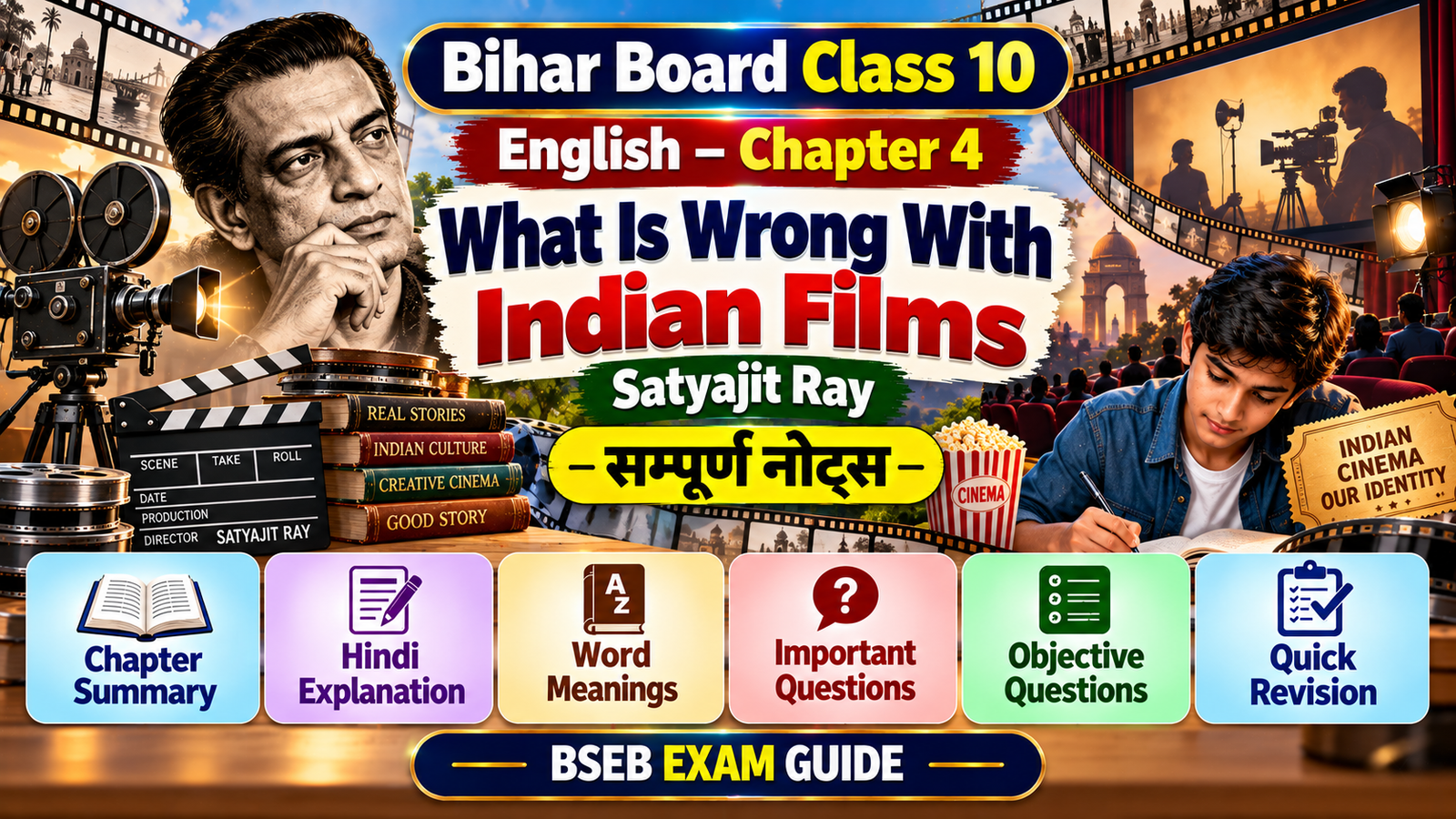
What Is Wrong With Indian Films
Chapter 4 – सम्पूर्ण नोट्स
Satyajit Ray • Prose • Summary • Important Q&A
Chapter Introduction
What Is Wrong With Indian Films प्रसिद्ध भारतीय फिल्मकार Satyajit Ray का एक विचारात्मक निबंध है। यह उनकी पुस्तक Our Films, Their Films से लिया गया है।
इस निबंध में Ray अपने समय के भारतीय सिनेमा की कमजोरियों पर चर्चा करते हैं। उनके अनुसार केवल अधिक संख्या में फिल्में बनाना पर्याप्त नहीं है; फिल्मों की गुणवत्ता, मौलिकता और कलात्मक ईमानदारी भी महत्वपूर्ण है।
भारतीय सिनेमा को विदेशी फिल्मों की नकल करने के बजाय भारतीय जीवन, संस्कृति और वास्तविकता से प्रेरणा लेकर अपनी विशिष्ट पहचान बनानी चाहिए।
इस Chapter में पढ़ेंगे
1. About Satyajit Ray
Satyajit Ray भारत के प्रसिद्ध film director, writer, illustrator और composer थे।
उनकी प्रसिद्ध फिल्मों में Pather Panchali, Aparajito, Charulata और Shatranj Ke Khilari शामिल हैं।
उन्होंने Venice, Cannes और Berlin जैसे अंतरराष्ट्रीय film festivals में सम्मान प्राप्त किए। Oxford University ने उन्हें honorary doctorate से सम्मानित किया था।
2. Chapter Summary
Satyajit Ray शुरुआत में cinema को आधुनिक युग की एक अत्यंत शक्तिशाली और बहुमुखी कला के रूप में देखते हैं।
Cinema में poetry, music, painting, drama और architecture जैसी अनेक कलाओं के तत्व मिलते हैं। इसके साथ science और technology की भी महत्वपूर्ण भूमिका होती है।
भारत ने film production बहुत जल्दी शुरू कर दिया था। पाठ के अनुसार, भारत में पहला short film 1907 और पहला feature film 1913 में बना। 1920 के दशक तक film production बड़ा business बन चुका था।
Ray इसके बाद quantity और quality के बीच अंतर बताते हैं। भारत बहुत अधिक फिल्में बनाता था, लेकिन उनके अनुसार केवल बड़ी संख्या में फिल्में बनाना उच्च गुणवत्ता की गारंटी नहीं था।
उनकी मुख्य आपत्ति यह थी कि भारतीय film-makers अक्सर Hollywood के models और techniques की नकल करते थे। लेकिन भारतीय समाज, जीवन और संस्कृति की परिस्थितियाँ अलग हैं।
इसलिए विदेशी शैली की सीधी नकल भारतीय फिल्मों को स्वाभाविक और विशिष्ट भारतीय पहचान नहीं दे सकती।
Ray के अनुसार filmmakers को वास्तविक भारतीय जीवन को ध्यान से देखना चाहिए और उसी से अपनी कहानियों तथा cinematic style के लिए inspiration लेनी चाहिए।
वे मानते हैं कि अच्छी भारतीय फिल्मों के लिए अत्यधिक दिखावे से अधिक imagination, honesty और simplicity आवश्यक हैं।
3. आसान हिंदी में Explanation
Cinema एक शक्तिशाली कला
Ray बताते हैं कि cinema केवल मनोरंजन का साधन नहीं है। इसमें कई कलाओं का मेल होता है। कहानी, अभिनय, संगीत, चित्र, दृश्य और तकनीक मिलकर एक film बनाते हैं।
भारत में फिल्मों का विकास
भारत में film-making की शुरुआत काफी जल्दी हो गई थी। धीरे-धीरे यह एक बड़े उद्योग में बदल गया और भारत बहुत बड़ी संख्या में फिल्में बनाने लगा।
Quantity और Quality
लेकिन Ray एक महत्वपूर्ण सवाल उठाते हैं—क्या बहुत अधिक फिल्में बनाना इस बात का प्रमाण है कि वे अच्छी भी हैं?
उनका उत्तर आलोचनात्मक है। वे अपने समय की भारतीय फिल्मों में quality और maturity की कमी देखते हैं।
यह essay Satyajit Ray के अपने समय के भारतीय cinema पर लिखा गया आलोचनात्मक विचार है। इसे आज की सभी भारतीय फिल्मों पर स्वतः लागू नहीं माना जाना चाहिए।
Hollywood की नकल
Ray के अनुसार भारतीय filmmakers पर Hollywood का बहुत प्रभाव था। वे विदेशी फिल्मों की story, style और techniques की नकल करने की कोशिश करते थे।
लेकिन America और India की सामाजिक तथा सांस्कृतिक परिस्थितियाँ अलग हैं। इसलिए ऐसी नकल कई बार भारतीय जीवन से असंगत लगती है।
Indian Identity की आवश्यकता
Ray चाहते हैं कि भारतीय cinema की अपनी पहचान हो। भारतीय filmmakers को अपने देश के लोगों, जीवन, संस्कृति, संगीत, कला और वास्तविक परिस्थितियों से inspiration लेनी चाहिए।
Imagination और Honesty
अच्छी film केवल महँगे उपकरणों या चमकदार presentation से नहीं बनती। Ray imagination और honesty को विशेष महत्व देते हैं।
एक अच्छी भारतीय film को मौलिक, ईमानदार और भारतीय जीवन की वास्तविकता से जुड़ा होना चाहिए।
4. Cinema as an Art Form
भावना और अभिव्यक्ति
ध्वनि और संगीत
दृश्य सौंदर्य
कहानी और अभिनय
दृश्य संरचना
तकनीक और logic
5. Weaknesses Pointed Out by Ray
1. अपने समय की भारतीय फिल्मों में maturity की कमी।
2. Hollywood का अत्यधिक imitation.
3. Indian life से पर्याप्त inspiration न लेना।
4. Story और presentation में originality की कमी।
5. कुछ फिल्मों में visual inconsistencies.
6. Style और content को आवश्यकता से अधिक complicated बनाना।
7. पर्याप्त planning की कमी।
8. Imagination और honesty पर पर्याप्त जोर न देना।
6. Ray’s Suggestions for Indian Cinema
Originality
दूसरों की नकल के बजाय अपनी मौलिक cinematic identity बनाएँ।
Indian Life
भारतीय जीवन और समाज को inspiration का आधार बनाएँ।
Honesty
Film-making में artistic honesty होनी चाहिए।
Imagination
Technical gloss से अधिक creative imagination महत्वपूर्ण है।
Simplicity
Style और content को अनावश्यक रूप से जटिल न बनाएँ।
Observation
Filmmakers को वास्तविक जीवन को ध्यान से देखना चाहिए।
7. Exam Important Points
1. The essay is written by Satyajit Ray.
2. It is taken from Our Films, Their Films.
3. Cinema is described as a potent and versatile art form.
4. Cinema combines several arts and the logic of science.
5. The first short film in India was produced in 1907.
6. The first feature film was produced in 1913.
7. By the twenties film production had become big business.
8. Ray distinguishes quantity from quality.
9. Hollywood was a dominant influence on Indian films.
10. Ray opposes blind imitation of foreign cinema.
11. Indian films need their own recognizable identity.
12. Life itself should provide the raw material for cinema.
13. Ray stresses imagination and honesty.
14. He recommends greater simplicity of style and content.
8. Important Word Meanings
9. Important Short Answer Questions
Q1. Who wrote “What Is Wrong With Indian Films”?
Answer: Satyajit Ray wrote the essay.
Q2. From which book has the essay been taken?
Answer: It has been taken from Our Films, Their Films.
Q3. What is the most potent and versatile art form?
Answer: Cinema is the most potent and versatile art form.
Q4. What arts does cinema combine?
Answer: It combines poetry, music, painting, drama, architecture and other arts along with the logic of science.
Q5. When was the first short film produced in India?
Answer: It was produced in 1907.
Q6. When was the first feature film produced in India?
Answer: It was produced in 1913.
Q7. What dominant influence does Ray find on Indian films?
Answer: He finds a strong influence of Hollywood on Indian films.
Q8. Why does Ray oppose blind imitation of Hollywood?
Answer: Because Indian life and social conditions differ from those of America, so blind imitation can make films artificial and unconvincing.
Q9. What does Indian cinema need according to Ray?
Answer: It needs imagination, honesty and a style rooted in Indian life.
Q10. What should provide the raw material for cinema?
Answer: Life itself should provide the raw material for cinema.
Q11. What does Ray suggest about style and content?
Answer: He suggests a simplification of style and content.
Q12. What is the main theme of the essay?
Answer: The main theme is the need for originality, honesty and an authentic Indian identity in cinema.
10. Important Long Answer Questions
Q1. Write the summary of “What Is Wrong With Indian Films”.
Answer:
Satyajit Ray describes cinema as a powerful and versatile art form that combines many arts with science. India entered film production early and became one of the world’s major film-producing countries.
However, Ray argues that quantity does not necessarily mean quality. He criticizes the lack of maturity and originality that he observed in many Indian films of his time.
According to him, Hollywood had a strong influence on Indian cinema. Since Indian society and culture are different, blindly copying foreign models cannot create truly Indian films.
Ray therefore calls for imagination, honesty, simplicity and close observation of Indian life. He believes that Indian cinema should develop a style and identity of its own.
Q2. Why does Satyajit Ray criticize the imitation of Hollywood?
Answer:
Ray believes that Indian life and American life are different in their social and cultural backgrounds. Therefore, directly copying Hollywood stories and styles can make Indian films look unnatural.
He wants filmmakers to draw inspiration from Indian life, culture, music and art and develop an original cinematic language.
Q3. What does Indian cinema need according to Satyajit Ray?
Answer:
According to Ray, Indian cinema needs originality, imagination and honesty. Filmmakers should observe real life and use India’s rich cultural and social environment as their source of inspiration.
He also advocates simplicity in style and content so that Indian cinema can develop a distinctive and recognizable identity.
Q4. Why is cinema called a versatile art form?
Answer:
Cinema is called a versatile art form because it brings together many different forms of creative expression. It can use poetry, music, painting, drama and architecture.
At the same time, filmmaking also depends on science and technology. This combination makes cinema a unique and powerful medium.
11. Objective Questions
1. Who wrote “What Is Wrong With Indian Films”?
A. Mahadevi Verma
B. Satyajit Ray
C. Joan Lexau
D. Toni Morrison
2. The essay is taken from —
A. My Films
B. Our Films, Their Films
C. Indian Cinema
D. Film World
3. Cinema is a ______ art form.
A. weak
B. potent and versatile
C. simple
D. minor
4. India’s first short film was produced in —
A. 1905
B. 1907
C. 1913
D. 1920
5. India’s first feature film was produced in —
A. 1907
B. 1910
C. 1913
D. 1923
6. Indian films were strongly influenced by —
A. Hollywood
B. Agriculture
C. Sports
D. Newspapers
7. Satyajit Ray was famous as a —
A. Scientist
B. Film director
C. Cricketer
D. Lawyer
8. Which university conferred an honorary doctorate on Ray?
A. Oxford
B. Cambridge
C. Harvard
D. Delhi
9. Ray used to compose ______ for his films.
A. Music
B. Newspapers
C. Novels
D. Speeches
10. The raw material of cinema should be —
A. Foreign films
B. Life itself
C. Money only
D. Technology only
11. Ray emphasizes imagination and —
A. dishonesty
B. honesty
C. wealth
D. imitation
12. Ray wanted Indian cinema to have —
A. no identity
B. its own identity
C. only foreign stories
D. no music
12. Quick Revision
Author
Satyajit Ray
Book
Our Films, Their Films
Cinema
Versatile Art
Short Film
1907
Feature Film
1913
Influence
Hollywood
Need
Originality
Values
Imagination + Honesty
Raw Material
Life Itself
Goal
Indian Identity
Exam Tip
Satyajit Ray, Our Films Their Films, cinema as a versatile art, 1907, 1913, Hollywood influence, imitation, imagination, honesty, Indian identity और life itself as raw material जरूर याद करें।