The Empty Heart
Poetry 5 – सम्पूर्ण नोट्स
Periasamy Thooran • English Summary • हिंदी सारांश • Important Q&A
Poem Introduction
The Empty Heart is a meaningful poem by Periasamy Thooran. It presents the story of a rich man who has wealth but lacks contentment.
कविता में एक अमीर व्यक्ति है, लेकिन बहुत धन होने के बाद भी वह संतुष्ट नहीं है। वह Kalpaka, यानी wish-yielding tree, से और अधिक धन माँगता है।
उसकी इच्छा पूरी होती है, लेकिन अतिरिक्त धन उसे सुख देने के बजाय उसकी लालसा को और बढ़ा देता है।
Greed can never satisfy the human heart. True happiness comes from contentment, not from endless accumulation of wealth.
इस Poem में पढ़ेंगे
1. About Periasamy Thooran
Periasamy Thooran (1908–1987) was an Indian writer associated with Tamil literature.
इस कविता में उन्होंने एक simple story के माध्यम से greed और contentment जैसे महत्वपूर्ण human values को समझाया है।
Poem का संदेश सरल है—बाहरी wealth से भरा हुआ व्यक्ति भी अंदर से “empty” हो सकता है यदि उसके मन में संतोष न हो।
2. English Summary
The Empty Heart – Summary in English
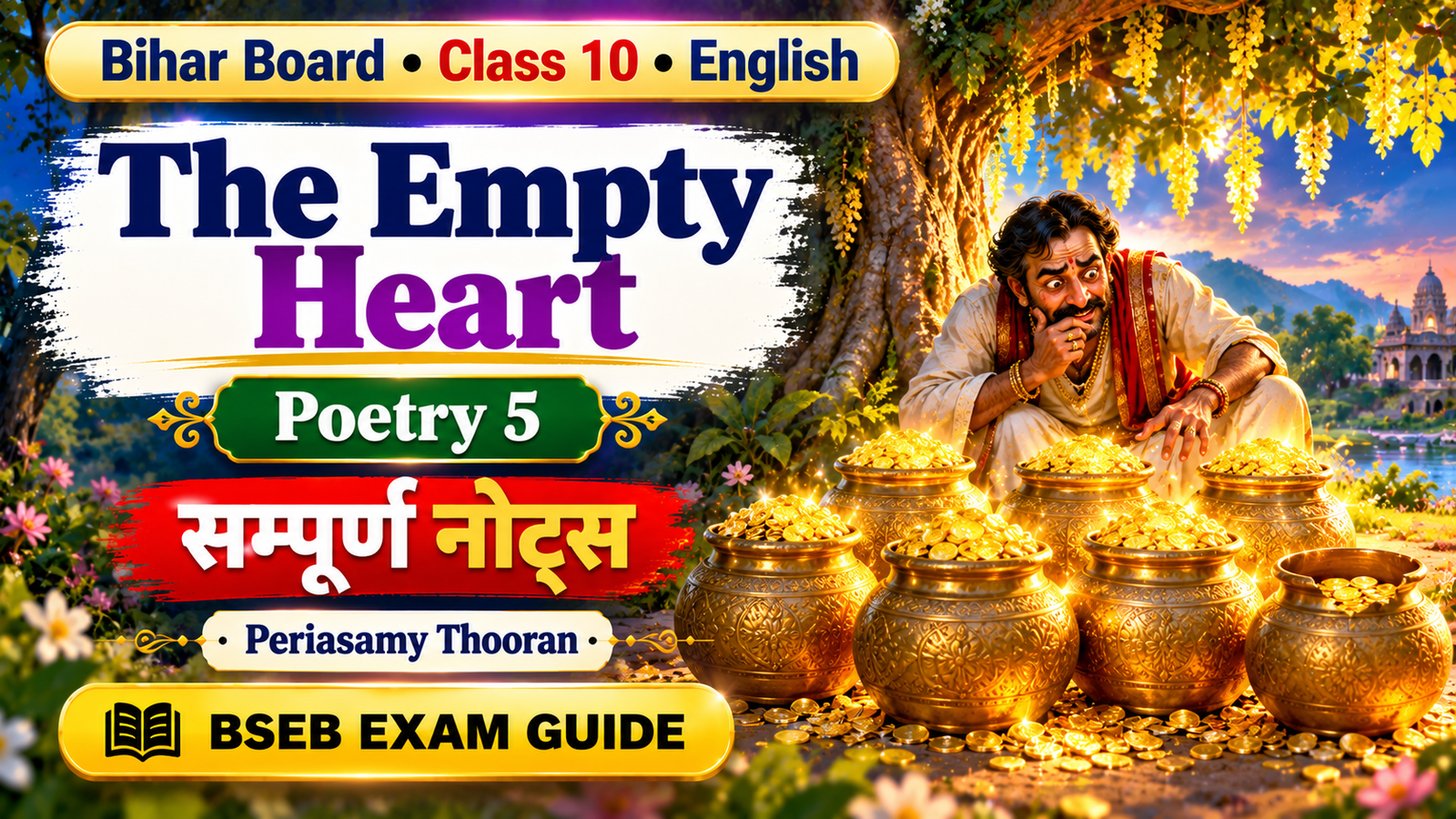
“The Empty Heart” tells the story of a rich man who is not satisfied with what he possesses.
Although he already has wealth, he repeatedly goes to the wish-yielding tree, Kalpaka, and asks for a pot of gold.
His prayer is granted generously. He receives seven pitchers filled with shining gold coins.
However, an eighth pitcher is only partly filled. This incomplete pot becomes the source of his dissatisfaction.
Instead of enjoying the seven full pitchers, the man becomes obsessed with filling the incomplete one.
His attention shifts from what he already possesses to what he still lacks. This shows the destructive nature of greed.
The more he tries to satisfy his desire, the stronger his desire becomes. Material wealth therefore fails to bring him real happiness.
The poem teaches that an empty and greedy heart cannot be filled merely by accumulating more money.
True richness lies in contentment. A person who knows how to be satisfied with what he has can experience genuine peace and happiness.
3. हिंदी सारांश
The Empty Heart – आसान हिंदी सारांश
यह कविता एक ऐसे अमीर व्यक्ति की कहानी है जिसके पास धन की कमी नहीं है, फिर भी उसके मन में संतोष नहीं है।
वह सुबह, दोपहर और रात wish-yielding tree Kalpaka के पास जाकर और अधिक धन की प्रार्थना करता है।
उसकी इच्छा पूरी होती है और उसे सोने के सिक्कों से भरे सात pitchers मिलते हैं।
लेकिन इसके बाद उसे एक आठवाँ pitcher भी मिलता है जो पूरा भरा हुआ नहीं है।
यहीं से उसकी समस्या शुरू होती है। वह सात भरे हुए pots से खुश होने के बजाय आठवें अधूरे pot को भरने में लग जाता है।
उसकी सारी सोच उसी अधूरे pot पर केंद्रित हो जाती है। जितना वह उसे भरना चाहता है, उसकी लालसा उतनी ही बढ़ती जाती है।
कवि इसके माध्यम से बताते हैं कि greed का कोई अंत नहीं होता। यदि मन में संतोष नहीं है तो बहुत अधिक धन मिलने के बाद भी मन खाली ही रहता है।
सच्ची खुशी अधिक धन जमा करने में नहीं बल्कि जो हमारे पास है उसमें संतुष्ट रहना सीखने में है।
4. Easy Explanation
A Rich but Unhappy Man
Poem का man पहले से rich है, फिर भी content नहीं है। यह शुरुआत में ही बताता है कि केवल wealth happiness की guarantee नहीं है।
Prayer to Kalpaka
वह Kalpaka या wish-yielding tree के पास जाता है और gold माँगता है। उसकी इच्छा धन बढ़ाने की है, आवश्यकता पूरी करने की नहीं।
Seven Full Pitchers
उसे सात pitchers मिलते हैं जो gold coins से भरे हैं। इतना धन मिलने पर सामान्यतः व्यक्ति को संतुष्ट होना चाहिए।
The Half-Filled Eighth Pot
लेकिन आठवाँ pot पूरा नहीं भरा है। यही अधूरापन उसकी सारी खुशी छीन लेता है।
Beginning of Greed
वह अपने सात full pots को भूलकर केवल incomplete pot के बारे में सोचता है। यह human greed का बहुत प्रभावशाली उदाहरण है।
The Empty Heart
असल खालीपन pot में नहीं बल्कि व्यक्ति के heart में है। उसकी desires कभी पूरी नहीं होतीं क्योंकि उसके पास contentment नहीं है।
An endless desire for wealth makes the heart poorer, not richer.
5. Significance of the Eighth Pot
Seven Full Pots
ये उस wealth का प्रतीक हैं जो man के पास पहले से मौजूद है।
Eighth Pot
यह उसकी अधूरी और endless desire को दिखाता है।
Half-Filled
यह उस feeling को दिखाता है कि “अभी और चाहिए।”
Greed
अधूरा pot उसके greed को लगातार बढ़ाता है।
Dissatisfaction
वह अपनी existing wealth का आनंद नहीं ले पाता।
Moral Symbol
Pot endless human wants का powerful symbol बन जाता है।
6. Significance of the Title
Why is it called “The Empty Heart”?
Title में “empty” का अर्थ केवल material emptiness नहीं है। Man के पास बहुत धन है, इसलिए वह बाहरी रूप से गरीब नहीं है।
उसका heart इसलिए empty है क्योंकि उसमें contentment और satisfaction की कमी है।
Seven full pitchers भी उसके inner emptiness को समाप्त नहीं कर पाते। इसलिए title poem के central message को बहुत अच्छी तरह व्यक्त करता है।
7. Main Themes
अधिक से अधिक पाने की इच्छा मनुष्य को असंतुष्ट रखती है।
संतोष को वास्तविक happiness का आधार बताया गया है।
केवल material wealth inner happiness नहीं दे सकती।
एक इच्छा पूरी होने के बाद दूसरी इच्छा पैदा हो सकती है।
Heart का खालीपन wealth से नहीं बल्कि contentment से भरता है।
Poem मनुष्य की “और अधिक” पाने की tendency पर टिप्पणी करती है।
8. Important Poetic Features
Symbolism: Half-filled pot endless human desire का प्रतीक है।
Contrast: Man rich है, लेकिन उसका heart dissatisfied है।
Irony: अधिक wealth मिलने के बाद भी man अधिक unhappy हो जाता है।
Narrative Style: Poem एक छोटी moral story की तरह आगे बढ़ती है।
Moral Message: Contentment is more valuable than unlimited wealth.
9. Exam Important Points
1. Periasamy Thooran wrote “The Empty Heart”.
2. The central character is a rich man.
3. The rich man is not content.
4. He prays to the wish-yielding tree.
5. The tree is called Kalpaka.
6. The man asks for gold.
7. He receives seven pitchers filled with gold.
8. An eighth pitcher is not completely full.
9. The incomplete pot increases his greed.
10. He fails to enjoy the wealth he already has.
11. The eighth pot symbolizes endless desire.
12. Wealth alone cannot create contentment.
13. Greed creates dissatisfaction.
14. The title refers to inner emptiness.
15. Contentment is the central moral of the poem.
10. Important Word Meanings
11. Important Short Answer Questions
Q1. Who wrote “The Empty Heart”?
Answer: Periasamy Thooran wrote “The Empty Heart”.
Q2. Was the rich man content with his wealth?
Answer: No, the rich man was not content with his wealth.
Q3. To whom did the man pray?
Answer: He prayed to Kalpaka, the wish-yielding tree.
Q4. What did the man ask for?
Answer: He asked for a pot of gold.
Q5. How many full pitchers of gold did he receive?
Answer: He received seven full pitchers of gold.
Q6. What was special about the eighth pitcher?
Answer: The eighth pitcher was only partly filled.
Q7. What does the eighth pot symbolize?
Answer: It symbolizes endless human desire and greed.
Q8. Why was the man still unhappy?
Answer: He was unhappy because he lacked contentment.
Q9. What does Kalpaka mean in the poem?
Answer: Kalpaka is the wish-yielding tree.
Q10. What is the main theme of the poem?
Answer: The main theme is greed versus contentment.
Q11. Why is the title “The Empty Heart” appropriate?
Answer: The man’s heart remains empty because endless greed prevents him from being satisfied.
Q12. What lesson does the poem teach?
Answer: The poem teaches us to be content with what we have.
12. Important Long Answer Questions
Q1. Write the summary of “The Empty Heart”.
Answer:
“The Empty Heart” is about a rich but dissatisfied man. He prays to the wish-yielding tree, Kalpaka, for more wealth.
He receives seven pitchers full of gold and an additional pitcher that is only partly filled. Instead of enjoying his great wealth, he becomes concerned with filling the incomplete pitcher.
His greed prevents him from becoming satisfied. The poem therefore teaches that wealth cannot fill a heart that lacks contentment.
Q2. Why was the rich man not content?
Answer:
The rich man was not content because his desires had no limit. Even though he already possessed wealth, he continued to want more.
After receiving seven full pitchers, his attention was drawn to the partly filled eighth pitcher. His greed made him forget what he already had.
Q3. Explain the significance of the eighth pitcher.
Answer:
The eighth pitcher is an important symbol in the poem. Unlike the other seven pitchers, it is incomplete.
It represents endless human desire. The rich man becomes obsessed with completing it and loses the ability to enjoy his existing wealth. Thus, the pot reveals the destructive nature of greed.
Q4. Explain the title “The Empty Heart”.
Answer:
The title refers to the inner condition of the rich man. Although he possesses material wealth, he has no contentment.
His heart remains “empty” because every gain produces a desire for more. The title therefore emphasizes that inner satisfaction is more important than material richness.
Q5. What moral lesson do you learn from the poem?
Answer:
The poem teaches that greed has no natural end. A person who constantly thinks about what he lacks may fail to enjoy what he already possesses.
True happiness comes from contentment and gratitude, not simply from accumulating more wealth.
13. Objective Questions
1. Who wrote “The Empty Heart”?
A. Vidyapati
B. Periasamy Thooran
C. Alexander Pope
D. William Cowper
2. The man in the poem was —
A. Poor
B. Rich
C. A soldier
D. A farmer
3. Although rich, the man was not —
A. Content
B. Strong
C. Famous
D. Young
4. The man prayed to —
A. Kalpaka
B. A king
C. A river
D. The moon
5. Kalpaka was a —
A. Golden pot
B. Wish-yielding tree
C. King
D. River
6. The man asked for —
A. Land
B. Gold
C. Food
D. Clothes
7. How many pitchers were completely filled with gold?
A. Five
B. Six
C. Seven
D. Eight
8. The eighth pitcher was —
A. Empty
B. Partly filled
C. Broken
D. Full
9. The eighth pot symbolizes —
A. Endless desire
B. Friendship
C. Nature
D. Courage
10. The man’s main weakness was —
A. Greed
B. Laziness
C. Fear
D. Shyness
11. The poem teaches the value of —
A. Contentment
B. Anger
C. Competition
D. Pride
12. “The Empty Heart” is Poetry number —
A. 3
B. 4
C. 5
D. 6
14. Quick Revision
Poet
Periasamy Thooran
Character
Rich Man
Problem
Discontent
Tree
Kalpaka
Wish
Gold
Full Pots
Seven
Eighth Pot
Incomplete
Weakness
Greed
Value
Contentment
Message
Limit Your Desires
Exam Tip
Periasamy Thooran, rich man, Kalpaka, seven pitchers, eighth half-filled pot, greed, contentment, title significance और central idea को विशेष रूप से याद करें।